Training Developing Research Leaders: A BRC-Supported Journey from Physiotherapist to Clinical Academic and Commercial Research Consultant

My career has developed at the interface between clinical physiotherapy, neuroscience and rehabilitation research. Before becoming a physiotherapist, I worked in cognitive neuroscience at the University of Oxford, where I developed an early interest in neurophysiology and non-invasive brain stimulation. After qualifying, and completing core rotations in several London NHS Trusts, I returned to research alongside my clinical work in neurological rehabilitation, with the aim of developing tools that could improve assessment, prognosis and treatment for people with neurological injury.
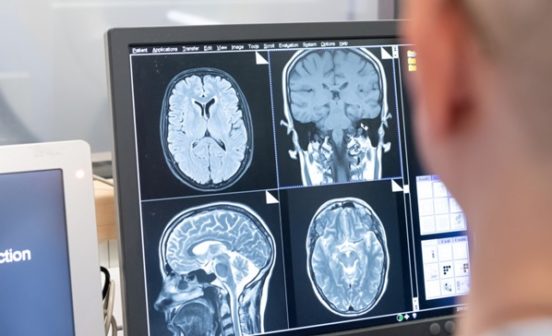
The NIHR Imperial Biomedical Research Centre (BRC) has been central to turning that ambition into a clinical academic career. My first major step was a pre-doctoral fellowship, co-funded by the Imperial BRC and Imperial Health Charity. This gave me protected time to develop an independent research programme, undertake a pilot study using transcranial magnetic stimulation (TMS) to assess people with spinal cord injury, and build the skills and experience needed to compete for doctoral funding.
The fellowship also gave me access to a much broader research environment. Through the BRC and associated Imperial networks, including BRC Funded Patient Experience Research Centre (PERC) and Imperial’s Clinical Academic Training Office (CATO), I undertook training in areas ranging from patient and public involvement and research governance to statistics, programming and research management. Just as importantly, I was able to develop relationships with researchers, clinicians and mentors across Imperial College Healthcare NHS Trust, Imperial College London and the National Spinal Injuries Centre at Stoke Mandeville Hospital. Those connections have helped me refine my research questions, develop collaborations and become increasingly confident in leading my own research.
Building on the pre-doctoral fellowship, I was the first candidate to be awarded a fully funded NIHR Imperial BRC NMAHPP PhD Fellowship. My doctoral research investigates how neurophysiological measures can improve assessment and prediction of upper-limb recovery after cervical spinal cord injury. It combines prospective clinical research, development of rapid multi-muscle TMS mapping methods, quantitative modelling and qualitative work examining how clinicians make decisions about recovery and rehabilitation. Since beginning my pre-doctoral fellowship, I have produced four publications and have also co-supervised MSc research students, several of whom have contributed as co-authors to publications. Supporting students to develop their own research has become an important and rewarding part of my progression. A student who undertook a project building on our cortical mapping work presented his data at two UK physiology conferences, while I have presented my own research in the UK and internationally, at Society for Neuroscience 2025 in San Diego and most recently at the World Tetrahand Congress.
The BRC has therefore supported more than an individual PhD project. Its funding schemes, training, mentoring and research networks have created a pathway through which I have been able to move from a clinician interested in research towards becoming an independent clinical researcher with growing responsibility for developing others and translating research into practice.
The next stage of that journey will be outside the traditional academic pathway but remains closely connected to the BRC ecosystem. I will shortly be joining Neubond, a BRC-supported spin-out, in a senior role with oversight of its clinical research and neurophysiology studies. This provides an opportunity to apply the research, technical and leadership skills I have developed through the BRC to the translation of neurotechnology into clinically useful tools.
For me, this progression demonstrates the value of sustained support for clinical academics. The BRC provided opportunities at several critical transition points; from pre-doctoral development, through doctoral training and networking, to translation and research leadership, and has given me a foundation from which I can continue contributing to neurorehabilitation research and its application in clinical practice.
Rowan Boyles