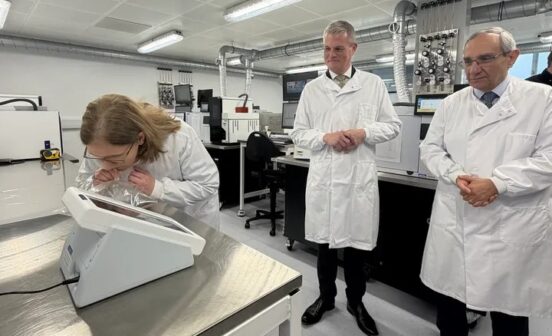
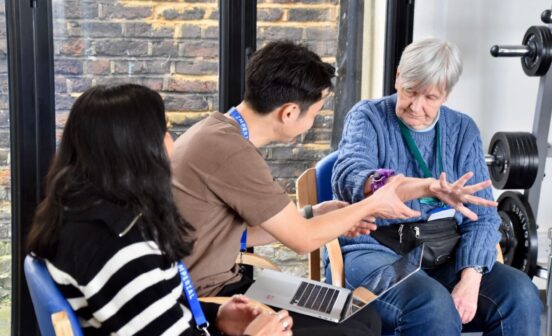
The Biomedical Engineering Theme is focusing on reaching into the breadth and depth of medical device and diagnostics research at Imperial College and Imperial College NHS Trust to translate these to influence all stages of patient health, traversing early diagnosis, clinical intervention, follow-up monitoring and rehabilitation.
Why is this Research Needed
Technology gives the opportunity for significant healthcare benefits, yet frequently these benefits are lost due to regulatory and adoption barriers in our health service. Over the past decade Imperial has developed critical mass and expertise in technology, regulatory approvals, and translational and commercialisation of medical technologies through a project management “translational passport” process. This will be scaled up and expanded through to first-in-human trials and NHS adoption pathways in order to research methods for maximum patient benefit.
Theme Aims
We aim to provide a patient-centred technology gateway into clinical practice for North-West London, where technologies come into the theme through two routes: patient-led demand (technology-pull); and identification of available technologies to fulfil patient needs (technology-push). We will-
- conduct first in human clinical trials on our innovative technologies;
- identify and provide exemplars use of platform technologies and interventions;
- support rapid cycle of generating evidence on novel devices at early stages of development; and
- map clinical pathways and formulate strategies to overcome barriers to introducing disruptive and incremental-gain technologies into the clinical environment.
Projects within the Theme
We have three levels of projects: priority, pilot and support. Our priority projects are:
- a precision-medicine approach for personalised atrial fibrillation with a novel catheter design that enables simultaneous ablation and visualisation;
- our novel nanofibrous haemostatic material technology to address the key issues of requiring blood to be soaked up to cause clotting to seal the wound as well as dressing removal re-tearing and destabilising the wound; and
- repurpose and apply our platform functional electrical stimulation technology for patient-optimised pre- and post-operative joint arthroplasty surgery habilitation, targeting the most common orthopaedic conditions in NW London: hip and knee replacements.
Pilot projects
Virtual Arthroscopy using Magic Angle MRI
What is this project about?
This project developed a new, low-cost MRI scanner that can look inside joints — such as the knee — in remarkable detail, without the need for surgery. The scanner uses a special technique called “Magic Angle” imaging, which allows it to see the fine fibres that make up ligaments, tendons, and the meniscus (the cushioning tissue in the knee). These structures are notoriously difficult to assess using standard MRI scanners.
Currently, when doctors suspect a ligament or meniscal tear, patients often need keyhole surgery (arthroscopy) just to confirm the diagnosis. This new scanner could make that unnecessary — acting as a “virtual arthroscopy” that gives equally detailed information, completely non-invasively.
Why does it matter?
MRI scanners are expensive and in short supply in the UK, with long waiting lists — especially for musculoskeletal patients, who are often deprioritised behind cancer and neurology patients. A conventional hospital MRI costs around £1M to buy, £1M to install, and £0.5M per year to run. This new scanner is a fraction of that cost. It runs off a standard wall socket, requires no helium, and can fit in a normal office space — making it suitable for GP surgeries, community clinics, or even mobile use.
Early results are highly encouraging. The scanner detected tissue fibre detail in the knee’s ligaments and meniscus at a level not possible with other non-invasive techniques and identified specific injury types that were later confirmed during surgery.
What are the outputs of the project?
The project has delivered meaningful impact across several areas. Clinically, the team successfully imaged patients with ACL (anterior cruciate ligament) injuries, with findings corroborated by surgical outcomes. On the technology side, significant hardware and software improvements were made, including the development of a novel multi-channel receive coil that delivers better image quality. A European patent application is currently under active review by the patent office.
The project has established new and meaningful collaborative partnerships that are actively shaping the next phase of the research. Isokinetic and Esaote UK are supporting the preparation of further patient trials and evaluation, while TIC Health and Kyoto University are engaged in joint grant submissions and research preparation. These collaborations span both NHS and private healthcare settings as well as international academic institutions, reflecting the broad relevance and appeal of the technology.
How were patients and the public involved?
The team carried out a wide range of engagement and outreach activities throughout the project. A Patient Advisory Group visit was hosted to demonstrate the scanner in February 2025, and a public talk on “Looking after your joints and bones” was delivered at the THCOGIC outreach event in April 2025. The team also participated in a Gratitude Marketplace event at Charing Cross Hospital in September 2024.
Beyond these events, both healthy volunteers and patients were invited to experience the scanner first-hand and share their feedback. This proved to be of immense direct value — patients highlighted the scanner’s quiet operation, compact size, reclined scanning position, and reduced claustrophobia as major benefits compared to conventional MRI. Several of their suggestions led to immediate practical improvements in patient comfort, scan setup, and image acquisition procedures.
A Medical Tool to Make Cochlear Implant Surgery Safer and More Accessible.
What is this project about?
Cochlear implants are a life-changing technology for people with severe and profound hearing loss, allowing them to perceive sound by directly stimulating the hearing nerve. However, the surgery to insert these implants carries a significant risk of damaging the delicate structures of the inner ear, which can destroy any remaining natural hearing the patient still has. Because human hands are not precise enough to guarantee safe insertion, many people — particularly those who still have some residual hearing — are considered ineligible for the procedure.
To address this, the team developed a robotic medical tool that helps surgeons insert cochlear implants with far greater precision, providing real-time feedback during the operation. The device was tested using human cadaver bones and demonstrated a measurable reduction in the risk of damage during implant insertion — a promising step toward making the surgery safer for a much wider group of patients.
Why does it matter?
The inner ear is extraordinarily delicate, and even small errors during implant insertion can cause irreversible damage. By enabling more controlled and precise insertion, this technology could allow many more people — including those with remaining hearing — to become candidates for cochlear implants. This would significantly expand access to a treatment that can be truly transformative for quality of life. Beyond individual patients, the technology has the potential to reduce surgical complications, shorten recovery times, and ultimately ease pressure on hearing services across the NHS and internationally.
What are the outputs of the project?
The project has advanced significantly in terms of both clinical readiness and commercial potential. A patent has been filed in both the UK and EU, with a PCT international application in progress, securing the intellectual property that underpins the technology. The device has been validated in benchtop studies, and the team has redesigned it with manufacturing in mind, preparing for the next stage of clinical development.
The team has engaged with leading cochlear implant companies, including Cochlear Ltd. and Advanced Bionics, and has received interest from multiple investors. Work is actively underway toward creating a spin-out company to bring the technology to market. The project has also secured further funding momentum, with a Royal Academy of Engineering Enterprise Fellowship of £75,000 awarded, and a £1,050,000 NIHR i4i Product Development Award at interview stage, alongside interest from the LIHE MVB fund.
How were patients and the public involved?
Patients were active contributors to the design, implementation, and refinement of the technology and research strategy. A key public involvement session was facilitated through the NIHR Imperial Patient Experience Research Centre (PERC), bringing together three individuals who had previously undergone cochlear implant surgery. Their input directly validated the clinical relevance of the project’s goals — participants shared that earlier access to cochlear implants had profoundly improved their quality of life, reinforcing the urgent need for a tool that enables safer implantation in patients with residual hearing. Importantly, participants also challenged the team’s original assumptions, raising concerns about the realism of engaging separate patient groups in isolation and recommending more inclusive, mixed-group discussions at regular intervals. This feedback directly reshaped the engagement plan going forward.
A Wearable Device That Uses Vibrations to Aid Post-Stroke Rehabilitation.
What is this project about?
Stroke is a leading cause of long-term disability, with loss of arm and hand movement being one of the most common and debilitating consequences. More than 60% of stroke survivors do not receive the recommended amount of physiotherapy, largely due to a shortage of caregivers and the difficulty of continuing meaningful rehabilitation once patients return home.
To address this, the team developed a small wearable armband that uses muscle sensors (EMG) and vibrations to detect and respond to a patient’s own movement attempts in real time. By sensing muscle activity and delivering gentle vibrations as feedback, the device supports and reinforces the brain’s natural recovery process. It is designed to be used both in clinics and at home, fitting seamlessly into everyday activities such as grasping a cup, writing, or opening doors — without the need for complex screen-based exercises.
Why does it matter?
Current rehabilitation tools often rely on repetitive, screen-based exercises that patients find difficult to maintain, leading to high drop-off rates. This device offers a simpler, more intuitive alternative that patients can use independently. A pilot study demonstrated lasting improvements in wrist movement after just 15 days of therapy, and a longitudinal study with four patients showed a five-fold increase in muscle strength and sustained motor improvements six weeks after the intervention. Health economics analysis suggests the technology could save the NHS over £12 million per year by reducing hospital stays by up to 10% through effective home rehabilitation.
What are the outputs of the project?
The project has generated substantial clinical, regulatory, and commercial impact. Clinically, studies involving healthy volunteers and stroke patients have validated the device’s effectiveness, with improvements seen in range of motion, muscle activation, and performance in daily tasks. A risk management and regulatory strategy have been developed with an external advisor, mapping certification requirements for Class II medical device approval in the UK, US, and Japanese markets.
Commercially, the project has attracted significant further funding, including £300,000 from Innovate UK ICURe, £120,000 from ERC Proof of Concept, £80,000 from UKRI Impact Acceleration, and additional grants from Innovate UK, Imperial MedTechOne, and the CPI MedTech Accelerator — totalling over £565,000 in further investment secured. The team has also been featured in a Reuters interview, raising public awareness of the technology internationally.
The project has built a broad network of collaborations spanning industrial design with NuBiz (Korea) and LYEONS (UK), regulatory support through Compliance Solutions, clinical study and distribution partnerships with Abilities Care-net and STEPs Rehab, and clinical research collaborations with MiNT Academy and Hobbs Rehabilitation. Engagement with stroke charities — including Chiswick Stroke Club, Wimbledon Stroke Club, Islington Stroke Club, and Deeside Stroke Club — has been central to shaping the device around real patient needs.
How were patients and the public involved?
Patient and public involvement was embedded throughout the project. The team engaged with more than 50 individuals who have experienced stroke, as well as four local charity groups, to understand the real-world challenges of rehabilitation. This engagement revealed that existing solutions struggle to maintain patient motivation and that there is a strong need for therapy that fits naturally into daily life — insights that directly shaped the device’s design.
The team developed a lay summary with the PERC team for grant applications, participated in NHS-led PPIE activities at St. Mary’s and Hammersmith hospitals, and took part in public events including the Great Exhibition Road Festival, Gratitude events, London Tech Week, and the Medical Gadget Fair. A validation and acceptability study was also conducted with stroke survivors and individuals with arm disabilities, providing direct feedback that informed further improvements to the device.
Transforming Sepsis Care: The Next Generation AI Tool for Hospitals.
What is this project about?
Sepsis is a life-threatening condition affecting more than 250,000 people in the UK each year, causing around 48,000 deaths. When a patient develops sepsis in intensive care, doctors must make fast decisions about treatment — often under enormous pressure and with limited support. This project developed the AI Clinician, a smart software tool that uses artificial intelligence to provide real-time treatment recommendations to doctors caring for sepsis patients in intensive care units (ICUs).
The system learns from thousands of past patient cases to suggest the best course of treatment for each individual, integrating directly with hospital electronic health records and running in near real-time at the bedside.
Why does it matter?
In a live bedside study, clinicians rated the AI’s treatment recommendations as “just right” in 87% of fluid cases and 70% of vasopressor (blood pressure medication) cases. When doctors followed the AI’s guidance, patients had lower ICU mortality rates, and an expert panel judged the AI’s decisions to be equal or superior to those of doctors in 10 out of 17 cases. The system has already been deployed in live ICUs at Imperial College Healthcare NHS Trust and University College London Hospitals, capturing over 1,000 real-time decision points. Beyond individual patients, the tool supports overworked ICU teams, enables faster and more consistent sepsis care, and has helped over 25 ICU doctors gain hands-on experience working alongside AI in clinical decision-making.
What are the outputs of the project?
The project has delivered impact across clinical, regulatory, and workforce dimensions. The AI Clinician has been refined into a user-friendly, regulatory-compliant modular software platform capable of hosting multiple machine learning applications — making it a versatile, plug-and-play solution for future clinical uses beyond sepsis. The platform adheres to industry standards including Good Machine Learning Practice and Medical Device development guidelines, and MHRA regulatory documentation is underway.
A health economics analysis conducted with BRC and HRC support has demonstrated the potential cost-effectiveness of the tool for NHS adoption. The project has also attracted media attention, with coverage on the BBC and features in international healthcare publications, as well as showcasing at AI in healthcare events in the UK and internationally. Discussions with the Industry Partnership and Commercialisation team regarding patent protection are ongoing.
How were patients and the public involved?
Patients, sepsis survivors, and members of the public have been actively involved throughout the project. A patient advisory panel of six individuals contributes to shaping research direction and decisions. Their input has directly influenced software design and usability, and during an observational pilot study, the panel advised that individual patient consent was not required — a view that was formally documented and accepted as part of the ethical approval process.
Broader public engagement has included community talks, educational events, and participation in the annual Great Exhibition Road Festival. The team also works regularly with the Imperial College media department to share findings accessibly through the BBC and specialist press.
PROBE: A Smarter Blood Test to Help Doctors Choose the Right Treatment for Children’s Infections
What is this project about?
Every year, millions of children are brought to doctors with fevers and infections, but telling whether the cause is bacterial or viral remains one of the hardest challenges in medicine. This matters because antibiotics only work against bacterial infections, yet they are frequently prescribed when the cause is uncertain — contributing to antibiotic resistance, one of the greatest global health threats of our time. The PROBE project is developing MARPLE (Magnet-Assisted RNA Purification and Lateral flow Evaluation), a rapid blood test that can tell doctors within 10 minutes whether a child’s infection is bacterial or viral, using only a small drop of blood and producing a result on a paper strip readable by a smartphone. The key focus of this project was to take MARPLE from a working laboratory prototype and prepare it for real-world manufacturing, by redesigning the device for reliable, large-scale production using standard industrial methods rather than 3D printing. In parallel, the project began building the regulatory and commercial foundations needed to bring MARPLE into clinical practice.
Why does it matter?
In England alone, over 14 million paediatric GP consultations each year relate to fever or respiratory infection, and up to one-third of antibiotic prescribing in primary care is considered inappropriate. If MARPLE performs as expected in upcoming clinical studies, it has the potential to reduce inappropriate antibiotic prescribing by 20–30%, representing a significant benefit for patients and the wider healthcare system. Beyond antibiotic stewardship, the test could give doctors and families greater confidence at a moment that is often stressful and uncertain, supporting better shared decision-making at the point of care. The PROBE project has directly addressed one of the biggest barriers to making this a reality — the ability to manufacture the device reliably and cost-effectively at scale. Two clinical pilots are already planned: one at St Mary’s Hospital from December 2026, and one in The Gambia in 2027 in partnership with the MRC Unit at the London School of Hygiene and Tropical Medicine, demonstrating the test’s potential for both high- and low-resource settings.
What are the outputs of the project?
The PROBE project has delivered a redesigned, manufacturable version of the MARPLE device, with CAD designs completed and pilot-scale production of moulded parts already ordered for functional validation. Progress has also been made on intellectual property, including an invention disclosure covering the device, building on existing patented host-response gene signatures held by Imperial College London. Early regulatory documentation has been developed in line with ISO 13485 principles, with guidance from a specialist in Quality Assurance and Regulatory Affairs, laying the groundwork for future CE and UKCA marking. A clear route to market has been defined, including competitor analysis and a proposed business model, and an Expression of Interest has been submitted to CARB-X — the global non-profit accelerator for antibacterial innovation — to secure further translational funding. Discussions are underway with Imperial Enterprise regarding spinout formation, a manuscript is in preparation, and £700,000 in further funding has been secured through the PACE AMR – CLUE programme to support the next stage of development.
How were patients and the public involved?
Patients and members of the public have played an active role in shaping MARPLE’s development throughout the PROBE project, with earlier involvement from parents of children with acute illness informing the initial project design. When Community Partners reviewed the original application, they recommended a broader approach than the proposed small workshop, and the team responded by participating in a public engagement event during British Science Week, co-organised with PaeCH, PERC, the Mohn Centre for Children’s Health and Wellbeing, and West London Children’s Healthcare. Families interacted with an exhibit using symptom cards and a simulated blood test on a neonatal mannequin, with a prototype MARPLE device on display, while a multidisciplinary panel of clinicians, researchers, and parents provided an open forum for discussion. Feedback from children and parents confirmed strong resonance with the test’s aims, particularly around the uncertainty families feel when antibiotic decisions are made. These insights will directly inform the design of MARPLE’s results display and user interface, ensuring the test is not only clinically accurate but clearly understood and trusted by the patients and families it is designed to serve.
Patient and Public Involvement, Engagement and Participation
Patient and Public Involvement, Engagement and Participation is embedded at all levels of the Theme: at the Theme Management, in all priority projects (with named individuals), in all pilot projects (in the selection, planning and monitoring through the PPIE Theme Group), and in all supported projects through Theme updates. Theme-level recruitment is supported by our excellent lay members and our ‘home’ Theme Departments – Bioengineering and Surgery & Cancer – are sharing and embedding best practices for PPIE and EDI.
Equality, Diversity and Inclusion
A senior academic EDI lead and a senior professional services EDI lead will jointly work to ensure that the Theme is not only compliant with the overall BRC EDI strategy but is an example of excellence. Monitoring of data, processes and decision-making will take place as well as a consistent focus on culture with dedicated time given to reflection.
Theme Management Committee
The Biomedical Engineering Theme Management Committee include the following members:
- Professor Anthony Bull
- Professor George Hanna
- Professor Gina Brown
- Professor Rylie Green
- Dr Bohwon Kim
Detailed objectives can be downloaded here
Key Individuals
-

Professor Anthony Bull
Director of the School of Health MedTech and Robotics -
Professor George Hanna
Professor of Surgical Sciences -
Dr Bhamini Vadhwana
Clinical Research Fellow -
Dr Bohwon Kim
Head of Operations, BRC Biomedical Theme -
Dr Choon Hwai Yap
Senior Lecturer -
Dr Guang Yang
Senior Lecturer, Department of Bioengineering -
Dr Lance Rane
Honorary Research Fellow -
Dr Nick Linton
Clinical Senior Lecturer -
Dr Piers Boshier
Clinical Senior Lecturer in Upper Gastrointestinal Surgery -
Mr Daniel Leff
Reader in Breast Surgery - Theme Committee Member -
Prof Daniel Elson
Reader in Surgical Imaging -
Professor Alison McGregor
Professor of Musculoskeletal Biodynamics -
Professor Christofer Toumazou
Winston Wong Chair, Biomedical Circuits -
Professor Dario Farina
Chair in Neurorehabilitation Engineering -
Professor Ferdinando Rodriguez y Baena
Co-Director of Hamlyn Centre, Professor of Medical Robotics -
Professor Gina Brown
Professor of Gastrointestinal Cancer Imaging -
Professor Hashim Ahmed
Chair in Urology -
Professor James Moore Jr
The Bagrit & RAEng Chair in Medical Device Design -
Professor Jonathan Jeffers
Professor of Mechanical Engineering -
Professor Justin Cobb
Chair in Orthopaedic Surgery -
Professor Mengxing Tang
Professor of Biomedical Imaging -
Professor Nagy Habib
Professor of Hepatobiliary Surgery -
Professor Rylie Green
Head of the Department of Bioengineering