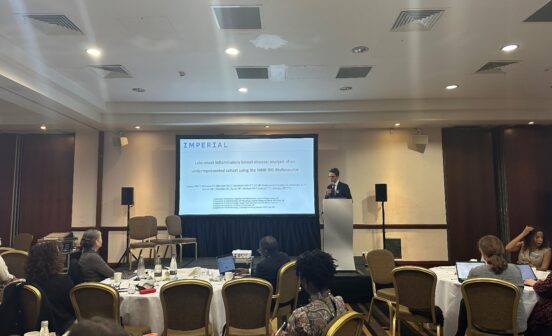
Gastrointestinal (GI) disorders account for 20% of primary care consultations and are important drivers of mortality, morbidity, and escalating healthcare cost. We are focused on exploring both Inflammatory Bowel Disease (IBD) and chronic liver disease (CLD) in the north west London using cutting-edge, multi-omic approaches.
Why this Research is Needed
The GI tract is home to over 40 trillion bacteria, which together with communities of fungi and viruses, is known as the microbiome. Disturbance of the microbiome and host-microbe interactions underlie many GI and liver diseases, mediated through loss of gut barrier function, dysregulation of immune function, disruption of metabolism and carriage of pathobionts. Experimental probing and manipulation of this ecosystem is key to improving patient outcomes. The Digestive Diseases Theme will leverage unique local expertise and convergence science opportunities to address five areas of GI/liver disease which arise from disorders in the intestinal microbiome.
Theme Aims
The Digestive Diseases theme will explore the following areas of research
- Colonisation with antibiotic resistant bacteria in vulnerable patients
- Movement of microorganisms from the gut into the host, due to impaired gut integrity
- Precision medicine to guide treatment in inflammatory bowel disease using host-microbiome profiling
- Precision medicine in liver disease
- Testing novel treatment strategies and premorbid diagnostics in cancer drug induced colitis and hepatitis
Detailed Theme Objectives can be found here.
Upcoming /Ongoing Projects within the Theme
Colonisation with multi-drug resistant organisms (MDRO) in vulnerable patients: Working with haemato-oncologists, we have shown that we can rescue gut microbiota diversity and reduce MDRO colonisation prior to hematopoietic cell transplant. This prehabilitation of the gut microbiota has been shown to have significant and wide health benefits. We will evaluate intestinal microbiota transplantation (IMT) to boost and rescue colonisation resistance in the gut microbiome of patients with cirrhosis, renal failure and diabetes – all patient groups in which there are reported very high levels of MDRO colonisation of the gut.
Translocation of microorganisms due to impaired epithelial integrity: Gut-barrier dysfunction is an important therapeutic target in IBD, CLD and cancer patients receiving immunotherapies. We will use IMT to improve gut barrier function or control pathobionts. Novel monitoring techniques deploying fluorescence-based, point-of-care gut integrity assays will be used to monitor the therapeutic impact in patients IBD, Alcoholic Liver Disease (ALD) and checkpoint inhibitor complications.
Precision medicine to guide treatment in IBD using host-microbiome profiling: Despite multiple advanced therapies for IBD, fewer than 50% of patients achieve durable mucosal healing. Using our knowledge of host immune function and molecular stratification tools, we will integrate multi-modal ‘omics data, from profiling the microbiome, metabolome and host transcriptome, to prospectively stratify patient responses to advanced therapies and develop much needed precision medicine approaches. In addition to testing our stratification tools in local cohorts, validation will be performed with key industry partners (Abbvie, Janssen, BMS, AZ), using ‘omics data collected in their landmark phase three and early phase clinical trials.
Precision medicine in Alcoholic Liver Disease (ALD): Building on our research in ALD, acute liver failure and acute decompensation, we will test strategies to restore protection against infection, which will overlap with the microbiome-based therapies including manipulation of the gut microbiome gut-barrier axis. Working with the Molecular Phenotyping Theme, we will extend precision medicine approaches to liver disease research in ALD and non-alcoholic fatty liver disease (NAFLD). The aim is to develop precision-based digital tools, to tailor treatment options to patients.
Test novel treatment strategies and premorbid diagnostics in checkpoint inhibitor induced colitis and hepatitis: Immune checkpoint inhibitors (CPI) are changing treatment paradigms in cancer, but often cause severe immune mediated inflammatory diseases, like IBD and autoimmune hepatitis, which leads to CPI withdrawal and hospitalisation. Based on preclinical observations we will test novel therapeutics (e.g. anti-IL-23) to alleviate disease without adversely impacting cancer outcomes or infection risk. Identification of the pre-disposing microbial communities, their associated metabolome, and the host response to their colonisation, offers novel opportunities for early (or even pre-morbid) diagnosis, and microbiome-based therapeutics.
Pilot Projects
Identifying Targets to Treat Liver Inflammation Caused by Cancer Immunotherapy
What is this project about?
Immune checkpoint inhibitors (CPIs) are a powerful new class of cancer treatment that work by releasing the “brakes” of the immune system, allowing it to recognise and destroy cancer cells more effectively. While highly effective against cancers including skin, kidney, and lung tumours, around two-thirds of patients experience side effects from the immune system becoming overactive. One serious complication is CPI-induced hepatitis, liver inflammation caused by the cancer treatment itself, which affects up to 30% of patients and can range from mild illness to life-threatening disease. Patients who develop it must stop their cancer treatment and take powerful immune-suppressing drugs, with up to 19% forced to permanently discontinue their cancer therapy. This project used cutting-edge genetic analysis of liver tissue samples to identify the specific immune pathways driving this damaging inflammation, with the aim of finding new treatments that could allow patients to continue their cancer therapy safely.
Why does it matter?
Currently, there are no targeted treatments for CPI-hepatitis — patients are managed with broad immune suppression that carries its own risks and reduces the effectiveness of their cancer treatment. By pinpointing the specific genes and immune pathways responsible for liver damage, this research opens the door to precision treatments that could suppress the harmful inflammation without undermining the cancer-fighting benefits of immunotherapy. This could be transformative for the growing number of patients receiving CPI therapies worldwide.
What are the outputs of the project?
This project produced the first ever detailed genetic map of the immune cells causing liver inflammation in patients receiving cancer immunotherapy — a landmark finding in the field. Liver tissue samples from patients with CPI-hepatitis were analysed using two state-of-the-art techniques that allow scientists to study the activity of thousands of genes within specific regions of tissue, revealing exactly which inflammatory signals are switched on in the damaged liver. Several key targets were identified, including a signalling pathway called JAK-STAT, which acts like a relay system that amplifies the immune response. Encouragingly, blocking this pathway using an existing drug called Upadacitinib showed beneficial effects in a laboratory model of the disease — a promising early sign that this could become a real treatment option for patients. A new laboratory method for analysing preserved liver biopsy samples was also established in collaboration with the BRC Genomics Facility, creating a reusable resource for future liver disease research.
How were patients and the public involved?
The researcher presented and discussed the project at multiple community partner meetings, receiving feedback on how to communicate the research accessibly to a lay audience. Community partners gave direct, productive feedback on the lay summary prepared for the MRC grant application — feedback that directly shaped how the research was framed and communicated.
Mapping Liver Cancer: How Fat Molecules Drive Tumour Growth and Treatment Resistance
What is this project about?
Liver cancer is one of the leading causes of cancer-related deaths in the UK, claiming around 6,000 lives every year, with at least a quarter of cases linked to obesity. It often develops in people with a long-term liver condition called MASH, a disease where fat, inflammation, and scarring build up in the liver over time. The most common form of liver cancer, hepatocellular carcinoma (HCC), is notoriously difficult to treat, and immunotherapy, which works by activating the immune system to fight cancer, only works in around 30% of patients. This project investigated why some liver tumours are more aggressive and resistant to treatment than others, focusing on the role of fat molecules (lipids) in driving tumour behaviour and shaping the immune environment within the tumour.
Why does it matter?
Every liver tumour is different — not just between patients, but even within a single tumour, where different regions can have very different molecular makeups. Understanding these differences is essential for developing treatments that are tailored to the individual patient. This project discovered that a specific fat molecule is present at higher levels in more aggressive tumours, in those with more genetic mutations, greater tendency to spread into blood vessels, and fewer cancer-fighting immune cells. If this fat molecule can be targeted with drugs, it could open a new way to make immunotherapy work for more patients.
What are the outputs of the project?
The team built high-resolution molecular maps of liver tumours from multiple patients, combining fat analysis, genetic sequencing, and gene activity mapping to reveal three distinct tumour types with different biological characteristics and clinical outcomes. Tumours with high levels of a specific fat molecule were found to be more genetically unstable, more invasive, and associated with immune cell dysfunction — a pattern typically linked to poorer prognosis and treatment resistance. Spatial transcriptomics and genetic sequencing were carried out in collaboration with Nik Matthews and the BRC Genomics Facility, with clinical expertise provided by Professor Mark Thursz.
How were patients and the public involved?
The team gave regular updates to Community Partners throughout the project and discussed public engagement plans with them directly. This input helped shape the interactive exhibit “Your Liver: The Inside Story”, co-organised for the Great Exhibition Road Science Festival. Community Partners played a hands-on role in refining the language used in public-facing poster materials to promote awareness of liver health and disease. The poster featured a QR code linking to an online trivia quiz that attracted more than 150 participants, sparking wider conversations about the research and its relevance to everyday health.
Predicting Which Treatment Will Work for Patients with Perianal Crohn’s Disease
What is this project about?
Crohn’s disease is a long-term condition that causes inflammation in the gut, leading to symptoms such as stomach pain, diarrhoea, and fatigue. Over time, some patients develop a particularly distressing complication called perianal Crohn’s disease — where the inflammation around the back passage becomes so severe that it creates abnormal channels, a bit like small tunnels, that burrow through the surrounding tissue. These tunnels, called fistulas, can connect the back passage to the skin, or in some cases to nearby organs. They cause significant pain, leakage, and infection, and can have a devastating impact on a person’s daily life, relationships, and mental health. More than 70% of patients with pCD experience depression or anxiety, and the condition has a profound impact on quality of life. Several drugs are available, but there is currently no way to predict which drug will work for which patient — leaving many people cycling through treatments while their condition worsens. This project is developing a gene-based test that could predict, before treatment begins, whether a patient will respond to the most used drug for pCD.
Why does it matter?
Without a reliable way to match patients to the right treatment, many people with pCD endure months or years of ineffective therapy, irreversible complications, and repeated surgeries — including permanent stomas. The financial cost is also enormous, estimated at over $71,000 per patient per year in the US. A predictive test that guides treatment choice from the outset could spare patients unnecessary suffering, reduce NHS costs, and transform outcomes for one of the most challenging forms of inflammatory bowel disease to treat. This directly addresses two of the top five research priorities identified by patients and clinicians through the James Lind Alliance.
What are the outputs of the project?
The project is embedded within GONDOMAR, a major UK-wide study recruiting over 1,200 patients with pCD across 40 hospitals, led by Sebastian Shaji. The team is testing whether a previously identified gene signature — shown to distinguish responders from non-responders to anti-TNF therapy in another form of Crohn’s disease — also predicts response specifically in pCD. Leading pCD fistula surgeon Phil Tozer has collaborated to optimise the biopsy collection protocol, ensuring samples are obtained safely and consistently across all sites.
How were patients and the public involved?
Patients were involved from the very earliest stages of the project. The study concept was presented at a dedicated patient involvement day hosted by Crohn’s and Colitis UK, where detailed feedback from 108 participants directly shaped the study protocol — including confirming that patients found the sample collection approach acceptable during routine procedures. A survey of 21 Crohn’s disease patients attending Imperial’s biologic infusion unit found that 20 out of 21 considered this a very important study. Community Partners also provided ongoing input during the project, helping to improve the clarity of technical language in research communications.
Using Detailed Biological Analyses to Develop Personalised Treatment for Inflammatory Bowel Disease
What is this project about?
Inflammatory bowel disease (IBD), which includes conditions like ulcerative colitis and Crohn’s disease, causes debilitating symptoms including bleeding, diarrhoea, and pain, and affects millions of people worldwide. Although patients share similar symptoms, the underlying biology driving their inflammation differs significantly from person to person. This means that a drug that works well for one patient may do nothing for another. This project is building one of the most detailed biological pictures of IBD ever assembled, collecting bowel biopsies, blood samples, and stool samples from patients during flares and at follow-up, to understand the unique inflammatory fingerprint of each individual — and ultimately to predict which treatment will work best for them.
Why does it matter?
Currently, IBD treatment is largely trial and error. Patients cycle through expensive drugs — some of which carry significant side effects — with no reliable way to know in advance which will work. By combining analysis of gene activity in bowel tissue, gut bacteria in stool, and inflammatory chemicals in blood, this project aims to identify patterns that predict treatment response. A patent application is already underway for newly developed predictive signatures, and if validated, these could transform IBD care — fast-tracking patients to the right treatment from the outset and sparing them months or years of ineffective therapy.
What are the outputs of the project?
Over 260 patients have been recruited to date across Imperial College Healthcare NHS Trust and London North West Healthcare NHS Trust, comprising more than 150 patients with active IBD, over 40 with inactive disease, and over 65 healthy controls. The first batch of samples has been sent to AstraZeneca — the project’s key industry partner — for integrated multiomic analysis, combining gut microbiome, metabolome, and gene expression data in a way that has not previously been done at this scale in IBD. The BRC Organoid Facility has been used to generate bowel organoids for future spatial transcriptomics experiments. The project is linked to the THAMES-IBD study (Therapy Personalisation using Multiomic Analyses in IBD), sponsored by Imperial College London and funded by AstraZeneca and St Mark’s Hospital Foundation. Strengthened collaborative ties with St Mark’s Hospital and London North West Healthcare University NHS Trust are a further valuable outcome of the project.
How were patients and the public involved?
Patient partners reviewed and critiqued the patient information sheets and consent forms, shared their own experiences of colonoscopies and biopsy sampling, and advised on translating study materials into different languages to reach underrepresented communities. Presenting the work to the Imperial College Patient Partners for IBD six months into the project generated practical insights on how best to collect stool samples, communicate with potential participants, and approach patients sensitively. Patients co-designed a recruitment poster for the study, and informal feedback gathered throughout recruitment has been used to continuously improve the patient experience. The team members accompanied participants to appointments and were readily available to answer questions, which was highly valued by patients
Patient and Public Involvement, Engagement and Participation
Working with the public is vital to the success of our work, in particular for helping us to understand how our research can be translated for the benefit of patients. We work with patients in various ways, including involving them in the design of our clinical studies and actively engaged in public outreach events to disseminate our work to wider audiences.
We have convened a patient and public involvement, engagement and participation group which includes patients with lived experiences of the diseases that we wish to impact.
Equality, Diversity and Inclusion
The Digestive disease theme’s EDI follows the five underpinning principles of our BRC: measurable, proactive, informed, reflective and equitable. In addition to ensuring all our staff complete their EDI training, we have also started recording EDI data in recruitment to monitor the demographic of applicants and ensure we are attracting a varied cohort of candidates.
We have been proactive in funding translation of patient consent forms and information sheets into different languages used by our local communities, including Arabic, Bengali, Gujarati, Hindi, Punjabi and Tamil, to facilitate greater inclusion of patients into studies from the north west London population.
Our Community Partners
In accordance with the Imperial BRC’s PPIEP Strategy , our theme has recruited a group of Community Partners to act as critical friends to our theme and share their valuable lived experience with our researchers and health professionals to help improve the relevance and quality of our research for the benefit of our North West London population.
Key Individuals
-

Professor Julian Marchesi
Professor of Digestive Health - Co-Theme Lead -
Professor Mark Thursz
NIHR Imperial BRC Director -
Professor Nick Powell
Professor in Gastroenterology - Co-Theme Lead -
Dr Alex Thompson
Lecturer in Sensing in Cancer -
Dr Benjamin Mullish
Clinical Lecturer -
Dr David MacIntyre
MRC-CDA Fellow & Lecturer in Reproductive Systems Medicine -
Dr Evangelos Triantafyllou
Lecturer in Liver Immunology -
Dr Horace Williams
Clinical Senior Lecturer -
Dr Isabel Garcia-Perez
Lecturer in Precision & Systems Medicine -
Dr James Maurice
Clinical Research Fellow -
Dr Jia Li
Reader in Biological Chemistry -
Dr Jiri Pavlu
epartment of Immunology and Inflammation -
Dr Jonathan Hoare
Consultant Gastroenterologist -
Dr Jonathan Swann
Senior Lecturer in Microbiomics and Human Development -
Dr Julie McDonald
Lecturer -
Dr Lesley Hoyles
MRC Intermediate Fellow in Data Science -
Dr Lucia Possamai
Consultant Hepatologist and Honorary Clinical Senior Lecturer -
Dr Nikihl Vergis
Clinical Senior Lecturer -
Dr Phil Tozer
Consultant Colorectal Surgeon -
Dr Pinelopi Manousou
Honorary Clinical Senior Lecturer -
Dr Sam Au
Senior Lecturer -
Dr Sarah Butcher
Head of Bioinformatics Support Service -
Dr Simon Peake
Consultant gastroenterologist -
Dr Tamas Korcsmaros
Senior Lecturer in Intestinal Epithelial Biology -
Dr Tamir Rashid
Clinical Reader in Liver Regeneration -
Dr. Joram Posma
Research Associate -
Professor Ailsa Hart
Professor of Practice -
Professor Elaine Holmes
-
Professor Gary Frost
Chair in Nutrition & Dietetics -
Professor Huw Thomas
-

Professor Kevin Murphy
Professor of Endocrinology & Metabolism -
Professor Marc-Emmanuel Dumas
Reader in Translational Systems Medicine -

Professor Robert Glen
Chair in Computational Medicine -
Professor Rongjun Chen
Professor of Biomaterials Engineering -
Professor Stella Knight
Senior Research Investigator -
Professor Timothy Orchard
Professor of Gastroenterology