Event Beyond the Technology: Building the Future of AI in Healthcare

On 10 July, the Imperial Academic Health Science Centre (AHSC), led by Director Mark Thursz, brought together researchers, clinicians, data specialists and innovators from across the translational digital health pipeline for an AI Healthcare Tools Workshop.
Held in Paddington – home to Imperial’s thriving life sciences and innovation community, including the NIHR Imperial Biomedical Research Centre (BRC) and iCARE, a cutting-edge data transformation initiative and home to the Imperial Secure Data Environment – the event showcased a range of AI healthcare innovations and the unique environments that help enable discovery, translation and real-world impact.
The breadth of expertise in the room reflected Imperial’s ability to connect world-leading research, clinical practice, technological innovation and industry partnerships, accelerating the journey from scientific discovery to improved patient care.
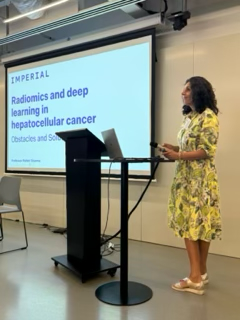
Presentations from the pipeline of Imperial-developed AI tools for healthcare included innovations to support the diagnosis, management or treatment of hepatocellular cancer, ovarian cancer, sepsis, dementia, young people’s mental health, earlier and more accurate diagnoses of lung cancer in primary care, and using large-scale imaging datasets to support the testing, validation and development of AI diagnostic tools, initially applied to sarcopenia assessment and chest X-ray tools for lung cancer detection.
Conversations explored the barriers and opportunities in translating AI into healthcare, including issues such as data access, data governance and approval processes, regulatory compliance, working with industry, commercialisation, and environmental sustainability.
Collaboration was recognised as essential to unlocking AI’s potential. Delegates highlighted the need to break down organisational and disciplinary silos, strengthen partnerships between Imperial and NHS Trusts, and create more opportunities for researchers, clinicians and innovators to learn from one another. Workshops like this provide a vital forum for building the relationships needed to turn promising ideas into real-world impact.
Patient trust was equally central. As AI becomes increasingly embedded in healthcare, speakers emphasised that success depends on transparency, meaningful patient engagement and a culture of responsible innovation. Echoing this, Professor Alastair Denniston reminded delegates that “Safety is more than regulation; it is a culture,” reinforcing that trust must be earned through the way technologies are developed, implemented and evaluated. The important work of the MHRA (The Medicines and Healthcare products Regulatory Agency) in supporting evidence-based regulation of AI was also highlighted, helping to ensure that innovation can be safely translated into healthcare while maintaining public confidence.
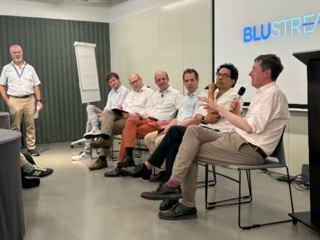
Discussions also emphasised the need for an end-to-end pipeline approach to accelerating the translation of AI innovations into clinical practice. Other key priorities included advancing AI testbed capabilities, alongside establishing robust mechanisms for post-market surveillance to monitor performance and respond effectively to AI failures. Erik Mayer observed that innovation is not simply about developing ever more sophisticated AI tools, but about “rethinking how organisations collaborate, evaluate technologies and translate innovation into practice”, while others highlighted the need to be bold and ambitious.
The workshop concluded with Payam Barnaghi highlighting the timely announcement of Growing Imperial’s AI ambition. While incidental, it provided a fitting close to a day centred on collaboration, innovation and responsible AI. The announcement reinforced the shared momentum across Imperial to build the partnerships, infrastructure and culture needed to shape the future of AI-enabled healthcare, reflecting many of the themes that had emerged throughout the day’s discussions.